When planning an LED lighting project, selecting the right fixture control protocol is one of the critical decisions. DMX512 and SPI are two mainstream solutions for addressable pixel LED lights. Many project engineers, installers and lighting designers often get confused about their differences, applicable scenarios and cost gaps. This article breaks down the core features, advantages & disadvantages and typical application scenarios of these two‑protocol fixtures, helping you make accurate judgments for your project.
DMX512 is a mature industry‑standard protocol widely adopted in stage and architectural lighting, running based on the RS485 differential bus. DMX512 fixtures read control signals through built‑in decoders or decoding chips. Each fixture or decoder is assigned an independent DMX address to adjust color, brightness and lighting effects individually.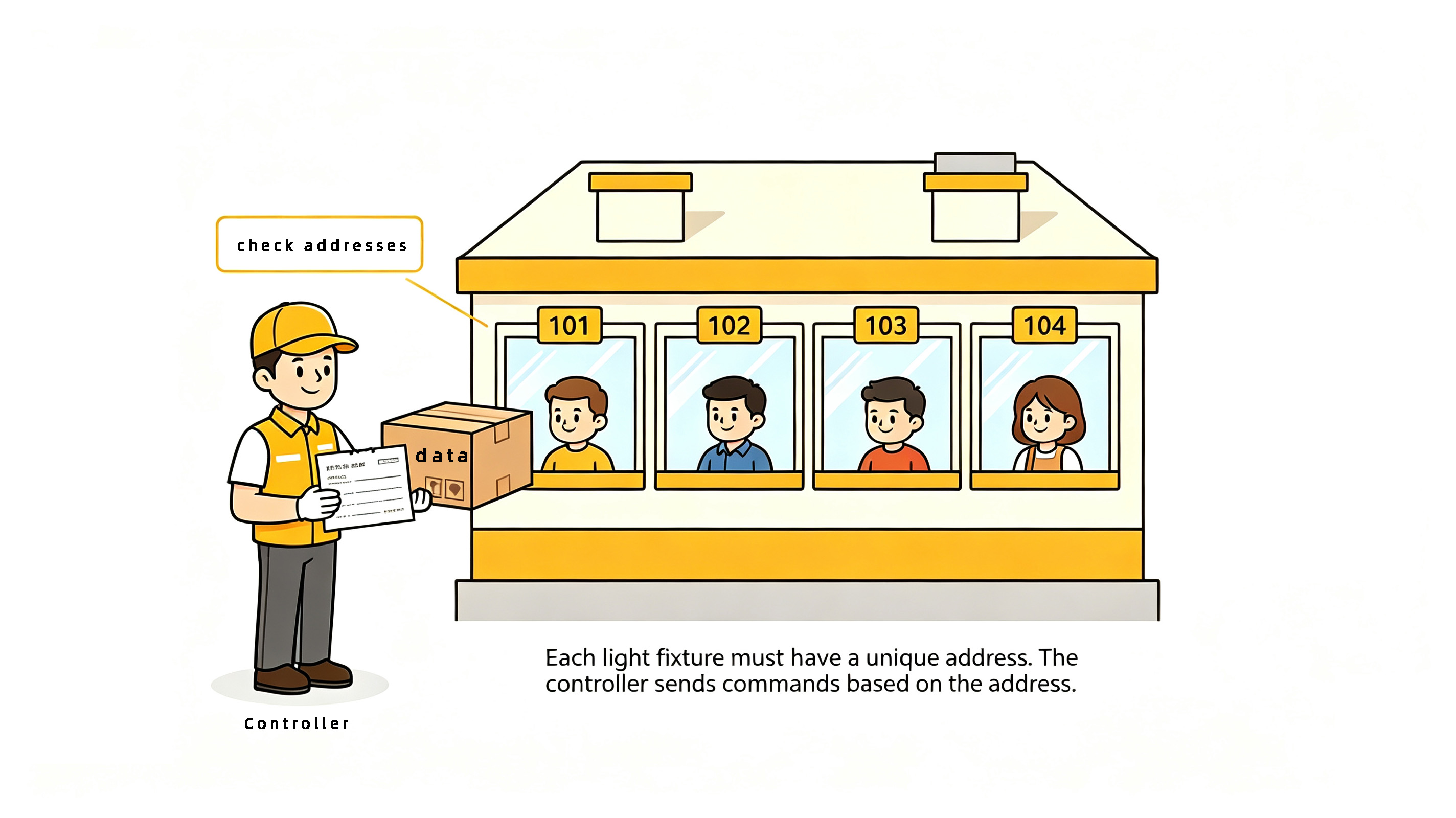
The term "DMX512 fixtures" mentioned in architectural lighting does not refer exclusively to traditional stage lights. Engineering products such as LED strips, wall washers and point‑source pixel lights often integrate decoding chips like UCS512 and TM512AC to meet engineering‑grade requirements for long‑distance transmission and high‑system stability.
SPI (Serial Peripheral Interface) is mostly applied to addressable LED strips and pixel lights. Each LED pixel has independent control capability. Data signals pass sequentially from one pixel to the next to realize independent light control per pixel. 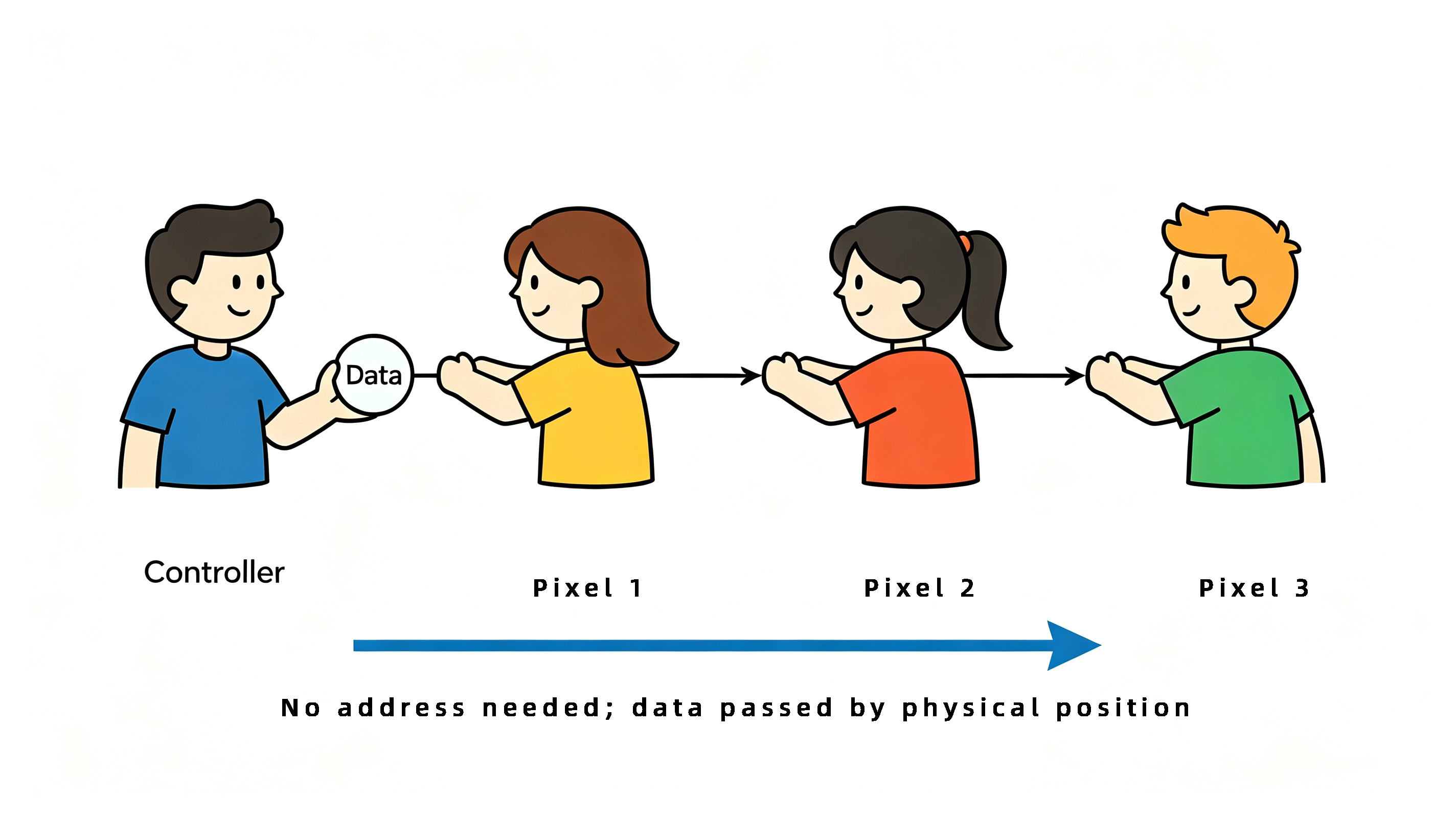
Common SPI driver chips in the industry include WS2811, WS2812B, WS2815, SK6812 and more. SPI solutions are well‑suited for high‑pixel‑density installations and delicate dynamic effects such as chasing, flowing and color gradient animations, with lower overall hardware costs.
SPI adopts single‑ended signal transmission. Signal attenuation easily occurs with long‑distance wiring or large pixel quantities. Hardware damage to one pixel on the chain may cut off data of all downstream pixels, so SPI fits short‑range indoor installation scenarios.
⚠️ Note: Even though the WS2815 features breakpoint‑resume function, signal interruption will still happen if two consecutive ICs on the link suffer physical damage. SPI signal amplifiers can only improve signal attenuation, they cannot resolve link disconnection caused by physically damaged chips.
DMX512 uses differential‑signal transmission with strong anti‑electromagnetic‑interference capability. A single cable segment can reach 100‑150 meters. Failure of one fixture will not affect normal operation of other devices on the bus, making DMX512 more suitable for outdoor and engineering‑grade projects.
Each port of a regular SPI led controller generally supports thousands of pixels. Multiple controllers with synchronization are required for extra‑large projects.
One standard DMX Universe contains 512 channels, supporting a maximum of 170 RGB full‑color pixels. With multi‑port controllers for cascading and synchronization, DMX systems can also manage tens of thousands of pixels.
SPI fixtures have relatively low commissioning barriers. You only need to connect signal cables and confirm data direction before operation. It works well for projects with tight debugging schedules and controllable installation environments.
DMX512 fixtures require address assignment before power‑on. Addressing a single device is not complicated, yet manual workload increases significantly when a project contains thousands of pixels.
For outdoor lighting projects such as building facades and bridge lighting, fixtures are often mounted on exterior walls or hard‑to‑reach high‑altitude positions. Once signal anomalies or fixture failures appear, maintenance requires high‑altitude operations, whose cost may even exceed that of the fixtures themselves. Such projects should prioritize high‑reliability solutions like DMX512, and reserve sufficient signal margin and test nodes during construction.
For exhibition decorations and short‑term festival projects, service cycles are short and disassembly is convenient. Minor pixel abnormalities can be handled after project completion. Compared with long‑term stability, priority is given to upfront‑cost control, and SPI shows obvious advantages in cost and installation convenience.
Small‑size project · Pre‑set loop animations · Budget‑sensitive · Short‑range wiring
Large‑scale engineering · Real‑time control · Long‑distance outdoor deployment · High‑reliability requirements
Neither DMX512 nor SPI is absolutely better. The optimal solution fully depends on project scale, functional requirements, on‑site construction environment and budget. SPI delivers flexible, low‑cost dynamic pixel effects for small‑scale creative lighting. DMX512 provides industrial‑grade stability and real‑time control for large‑scale professional lighting engineering.
If you are unsure which solution fits your project, our technical team can provide customized lighting‑control proposals and product recommendations for your addressable LED pixel light project.

